

Interview with Angus Scott, GradFoto 2025 Highly Commended Finalist
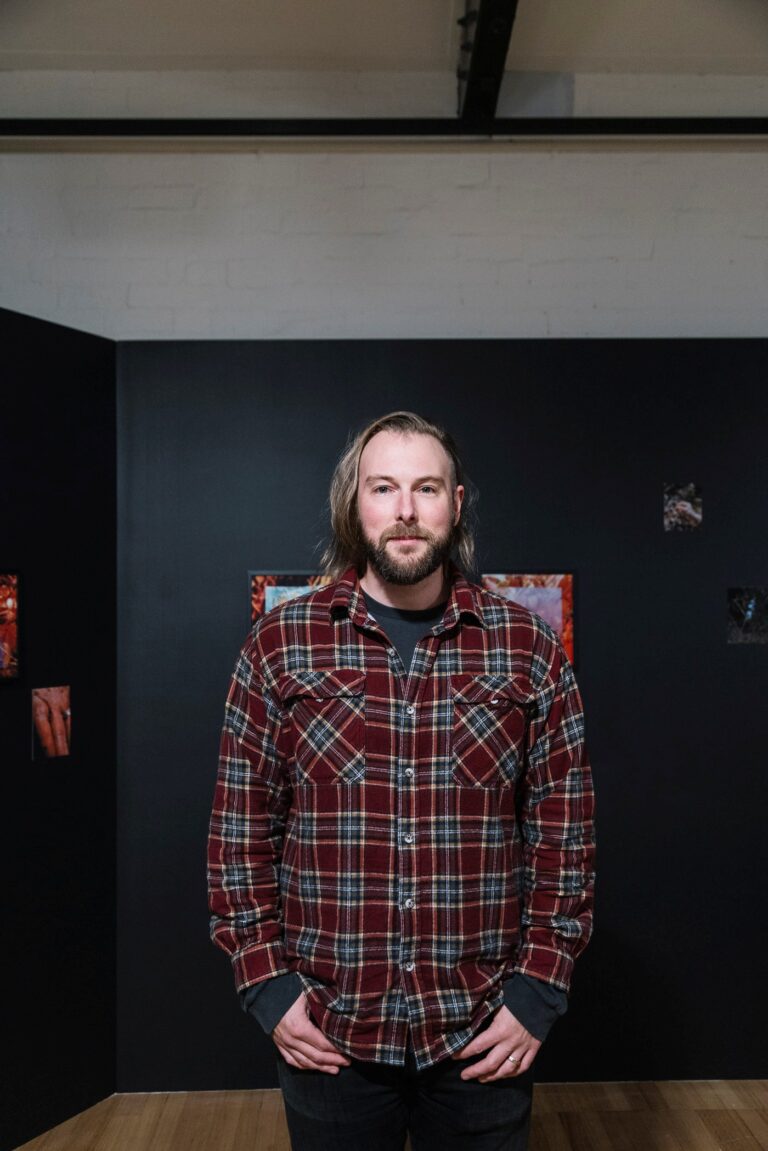
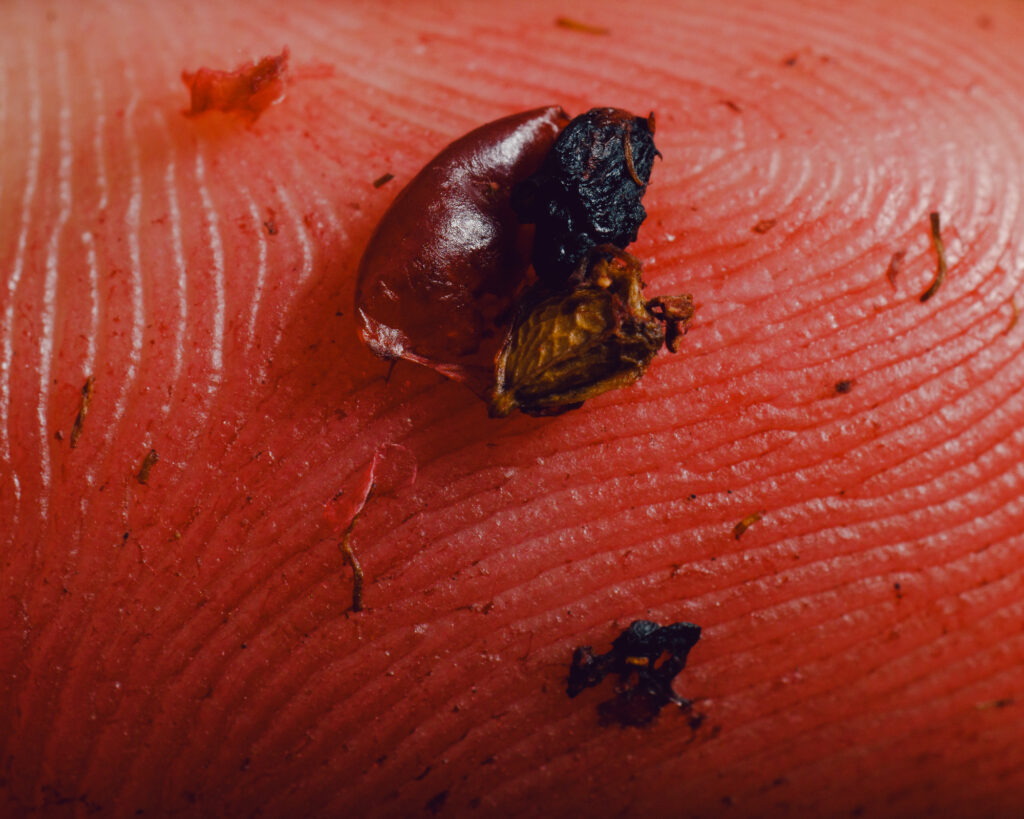
Curatorial Intern Theodora Pantelich spoke with 2025 GradFoto Highly Commended finalist Angus Scott about his project Tending the Invasion. Focusing on blackberry, the work explores introduced species in so-called Australia as sites of ecological, colonial and personal entanglement.
Theodora Pantelich: In your series Tending the Invasion, you explore the lasting ecological impacts of Australia’s colonial legacies through the case of the invasive blackberry species, introduced here by settler botanists in the nineteenth century. What drew you to focus on this plant in particular, given the myriad instances of introduced flora and fauna which continue to wreak havoc on local ecologies?
Angus Scott: I spend a lot of time around the mountains and high country, so blackberry is particularly visible in the spaces where I tend to find myself and care about. The main catalyst for this project came about by checking in on the annoyance I was experiencing when the brambles, which were expanding along riversides all over the mountain regions which I spend so much time in, were blocking usual access routes I had once used to go for a swim. The irony of being frustrated by an invasive species as a settler and occupier in these spaces wasn’t lost on me, and this led to the beginning of a process of relating to blackberry in ways that I hadn’t expected. Thinking about its position in the landscape, on Country, and its complicated history became a way of thinking through my own position in this place. This ended up becoming a really useful way of exploring broader implications of colonisation and environmental ethics whilst trying to keep my own experience at the centre of the project.
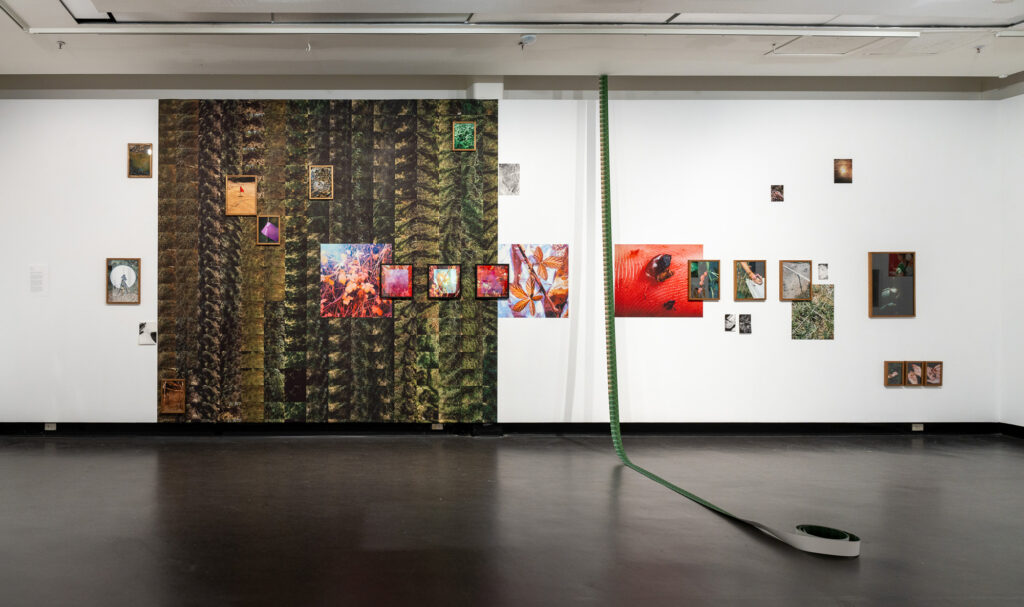
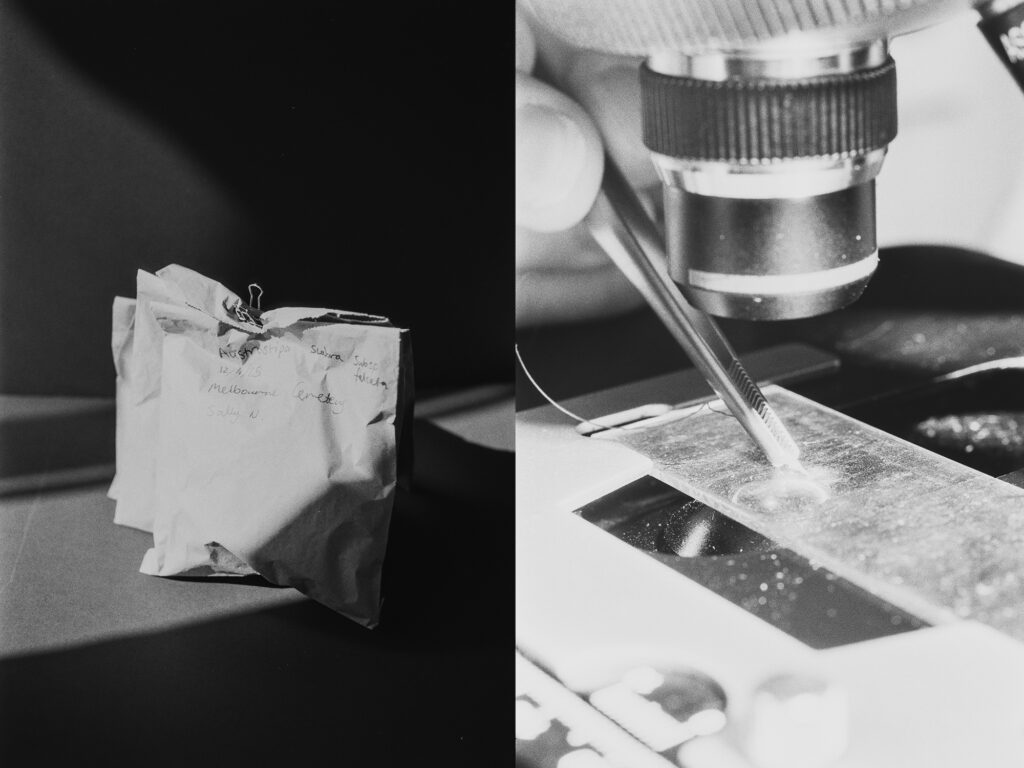
TP: The photos in this series seem to evoke both historic traditions of botanical illustration and a more clinical setting of contemporary specimen documentation and laboratory equipment. When conceiving these works, did you intend to interrogate the colonial history of plant sciences, botanical categorisation, and landscape documentation, and why?
AS: Absolutely, much of the project has been informed by scientific images, and the ways that these images can appear neutral while carrying assumptions about what counts as legitimate knowledge. These symbols can function to privilege a narrow band of knowledge-making, and historically have been used to justify colonial expansion via ‘exploration’ long before the invention of the photograph. I’ve come to think of these images as something of a visual language of invasion within themselves.
Coming into this project I wanted to look at these scientific images, their historic use and ties to the ways this continent was first invaded by Europeans. My wife, Sally Neeser, is a botanist and teaches environmental science at a university, and I participate in her fieldwork and research whenever possible, and she collaborates with my practice regularly as well. I regularly participate in and benefit from botanical science—as in it literally pays half of my rent—so honing in on these images in a more critical way was also a function of self-reflection.
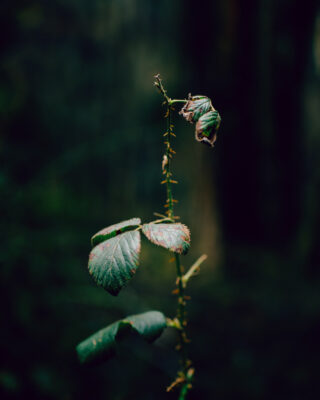
TP: The notion of Tending the Invasion seems, at first glance, to be a paradoxical one. To care for a destructive force is counterintuitive; similarly, to attempt acts of remediatory conservation in a place one has destroyed may seem inappropriate. Can you elaborate on your concept of ‘violent-care’ within environmentalism?
AS: Violent-care is a way of naming the tensions present within conservation frameworks. The term itself I learned about through the writing of Thom van Dooren, and its broader implications through the research of María Puig de la Bellacasa and Catriona Sandilands, just to name a few folks who are working in this area. The idea demonstrates how value systems can dictate which species are saved or sacrificed in the name of conservation.
In the context of blackberry, I found this to be a really interesting concept because the plant itself is so vilified. The Wonnangatta complex fire of 2025 was actually one of the things that first prompted me to think more deeply about this. I followed the fire closely as it evolved, and at the time there was documentation showing that the planned burn was intended in part to address blackberry and other invasive species in the valley. The burn subsequently escaped control and engulfed 3,076 hectares. For me, this became an example of the difficult relationship between intention and consequence in environmental management, particularly when caring for native species involves attempts to control invasive ones.
The notion of ‘tending the invasion’, in light of all this, came about through the questioning of the ways we approach such environmental interventions, and wondering what an alternative might look like. The title itself, I think, encapsulates these tensions: the soft and the hard, the care and the violence, these unresolvable in-between spaces. It feels antithetical or self-oppositional to me, and I think that’s a good starting point for exploring this idea.
TP: While you reject our perhaps natural instinct to view this invasive plant as merely a problem to be solved, you have also noted that protecting one species often requires harming another. After developing this project, do you think it is possible to navigate the inevitable tension between accountability for environmental harm versus care for living things (even the invasive ones)?
AS: I think we have to navigate that tension constantly, but I don’t think it can ever be fully resolved. The more I’ve worked on this project, the more uncomfortable I’ve become with the idea of a conclusion, or that a singular framework might be able to provide solutions to the very real problems the environment is facing through globalisation, invasive species, and anthropogenic climate change. Realistically, caring for one thing will often require harming another, and I think that negotiation is unavoidable.
My takeaway from this project has been to spend more time in the messy in-between rather than immediately jumping to problem-solving, and acknowledge that navigating these tensions will never be a clean process. This has instilled in me a greater awareness of how much I don’t know, and a desire to remain attentive to that. If anything, I think I’ve become more suspicious of simple answers, and more interested in the kind of deep, lived understanding that can develop when we stay with a problem rather than trying to resolve it too quickly.
My takeaway from this project has been to spend more time in the messy in-between rather than immediately jumping to problem-solving, and acknowledge that navigating these tensions will never be a clean process […] I think I’ve become more suspicious of simple answers, and more interested in the kind of deep, lived understanding that can develop when we stay with a problem rather than trying to resolve it too quickly.
Scientific knowledge is incredibly valuable, but perhaps the problem arises when that knowledge is treated as singular or definitive, and complex relationships are reduced to binaries like native and invasive.
TP: Do you have any advice for emerging photographers considering submitting to GradFoto in 2026?
AS: I really like the way that GradFoto makes room to recognise the broad bodies of work that graduates tend to have accumulated by the end of a program, and I think it’s a unique offering in Australia in that respect. I’d really encourage new graduates to take full advantage of the opportunity by finding the threads which connect their images together and presenting the breadth of their practice as fully as possible.